Replit has a special place in my heart because it is where I built my very first vibe coding project.
The project was a pricing calculator for sales reps that generates proposals and exports them to PDF and Google Slides.
That experience made me particularly interested in how Replit structures its pricing. Let us take a deeper look at the company's recent pricing update.
What Changed
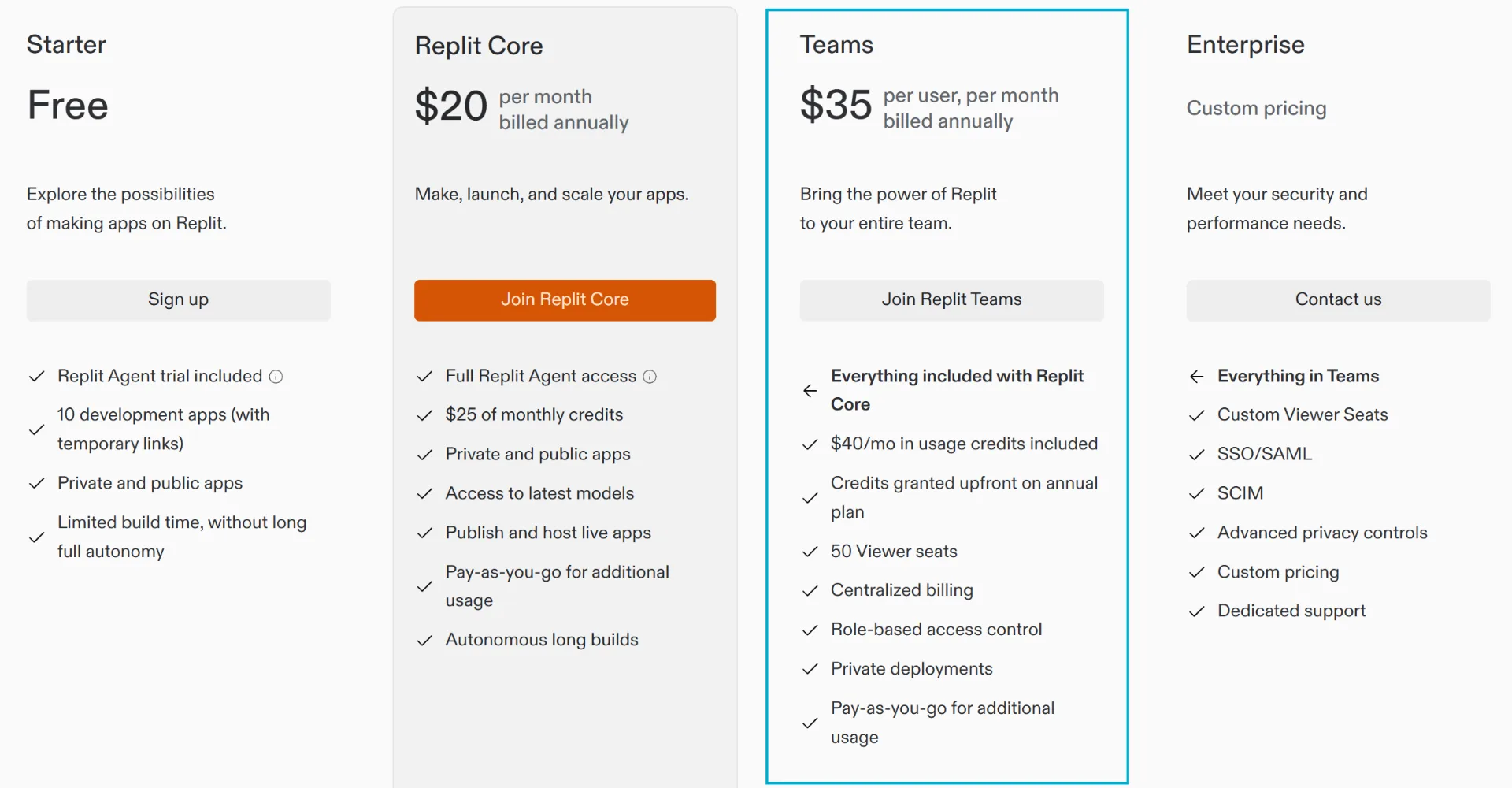
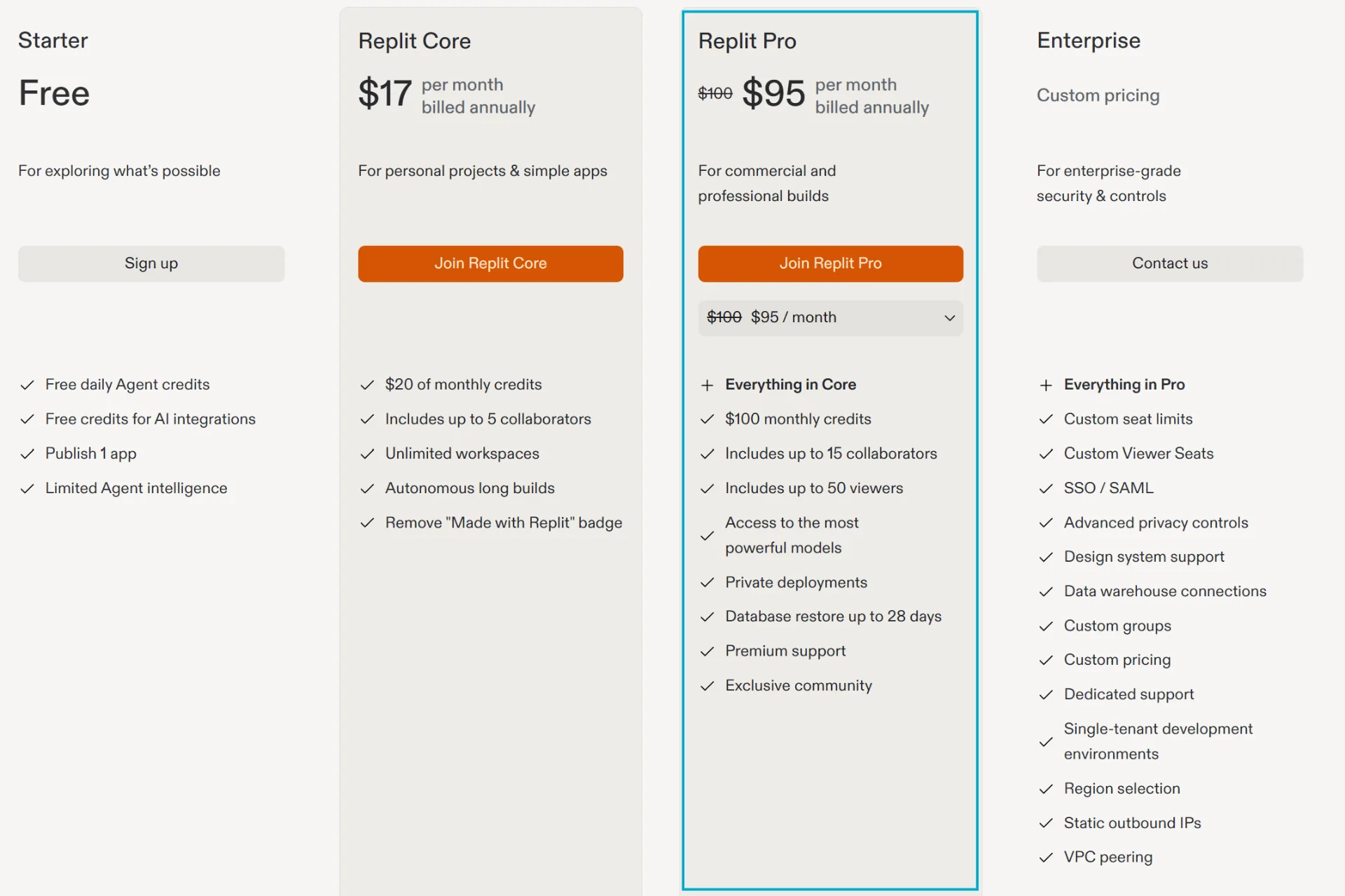
Replit updated its pricing in February, replacing the old Team plan ($35/user/month, annual billing) with Pro ($95/account/month, annual billing).
This change officially moves Replit's pricing from per-user pricing to usage-based pricing.
Old
- Team: $35 per user per month
New
- Pro: $95 per account
- Usage-based credits for development and infrastructure
Replit's Two Growth Drivers
Replit's new pricing introduces two primary growth drivers.
1. Plan upgrades
Higher plans provide more monthly credits, more collaborators, and access to more powerful models.
For example:
- Pro allows up to 15 collaborators, compared with Core's 5 collaborators
- Pro allows credits to roll over for one month
- Turbo mode is only available in Pro and Enterprise
- Enterprise includes additional security features and custom governance
This structure creates a natural upgrade path as teams scale their development.
2. Credit usage
Credits are consumed across the lifecycle of building and running applications.
Credits are spent on:
- Agent app building
- Publishing applications
- App usage and infrastructure
- App storage
The more complex the agent actions are, the more credits will be consumed.
Similarly, as more users interact with applications, infrastructure usage increases and consumes additional credits.
Agent
Replit Agent uses effort-based pricing, which scales with the complexity of requests.
More complex builds, debugging tasks, or multi-step agent workflows consume more credits.
Publishing and database
The old pricing provided a fixed number of reserved VM deployments.
The new pricing introduces more flexible deployment options, including:
- Autoscale deployments
- Scheduled deployments
- Reserved VM deployments
- Static deployments
Autoscale deployments only charge when applications are used, aligning infrastructure costs more closely with real application demand.
App storage
Instead of assigning a fixed amount of storage per account, the new pricing also uses credits for storage.
This allows storage usage to scale with application growth.
Managing Credit Consumption
While usage-based pricing is highly aligned with the value of building and scaling applications, credit consumption may not always be easy to understand.
To address this challenge, Replit provides several tools to help developers manage costs.
Agent modes
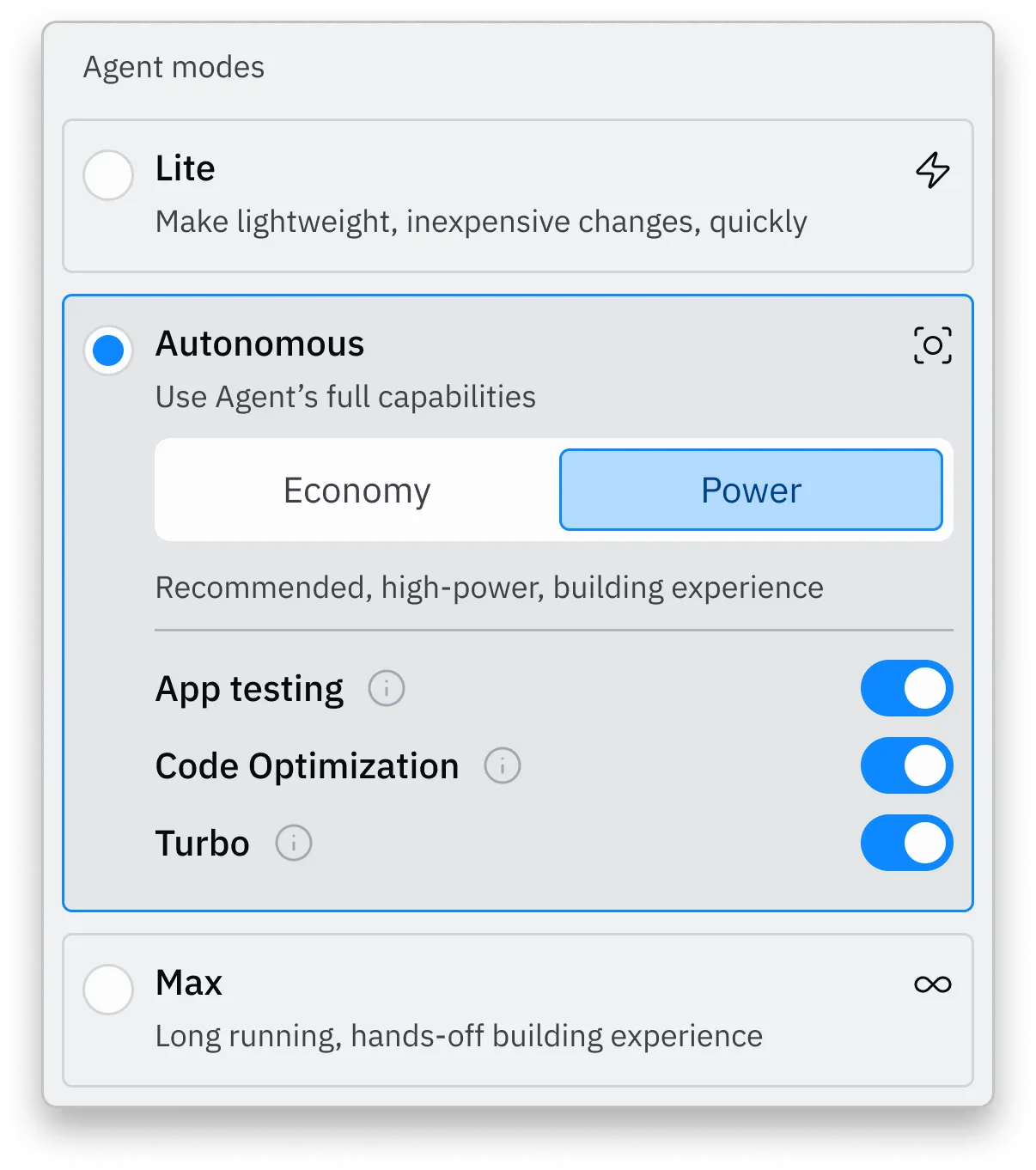
Developers can choose different agent modes depending on the desired balance between cost and performance.
- Economy mode
Optimized for cost and uses fewer credits per task. - Power mode
Optimized for performance and designed for complex tasks, larger codebases, and production-grade projects. - Turbo mode
Approximately two times faster than Power mode. Requests can cost up to six times more credits, so Replit recommends this mode only for experienced builders. - Max
A long-running mode designed to build complex full-stack applications with minimal human supervision.
Spending management
Replit also provides several tools to manage spending.
- Usage alerts that notify developers when spending thresholds are reached
- Budget limits that set hard caps to prevent overages
- Real-time usage tracking
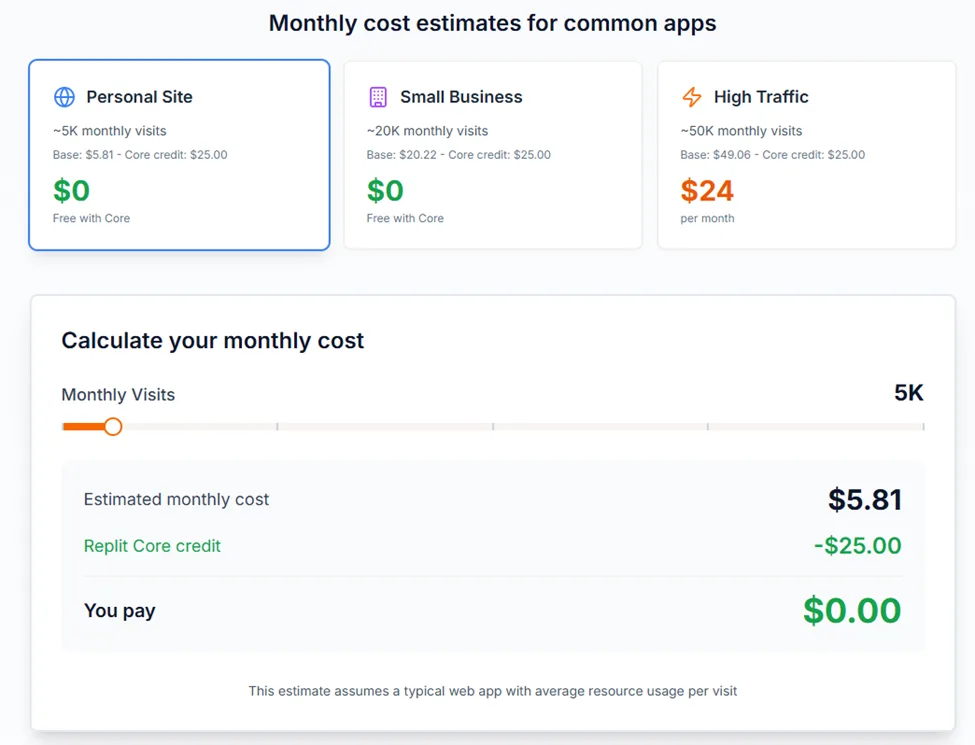
Cost estimation
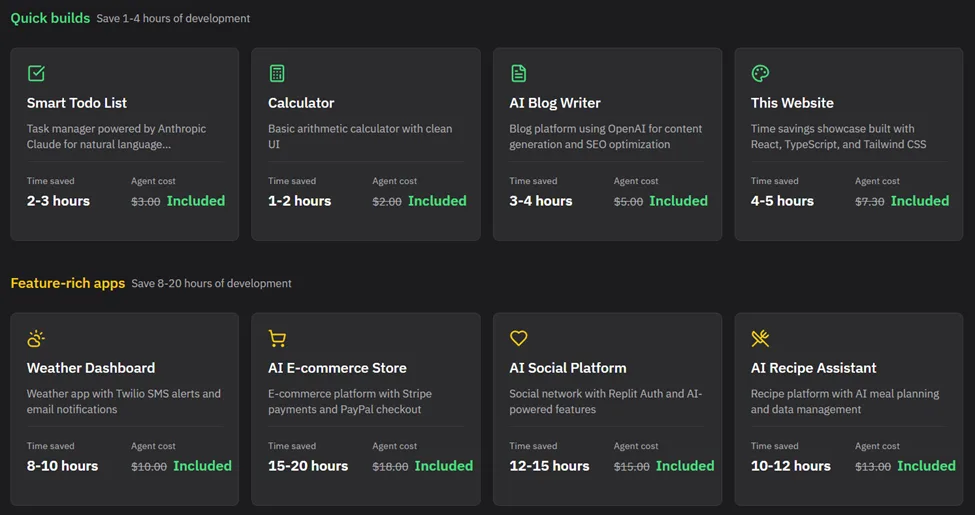
Replit provides cost estimates based on the complexity of builds.
This helps developers better understand potential credit consumption before executing larger tasks.
Strategic Insight: Why This Pricing Shift Matters
Replit's pricing change reflects a broader shift happening across AI-native software.
Traditional SaaS pricing relied on seat-based models, where revenue scaled with the number of users. However, AI development platforms generate value through compute, automation, and agent activity, which do not scale linearly with seats.
Usage-based pricing allows Replit to monetize three dimensions of value.
Development complexity
More sophisticated applications require more agent work, model inference, and orchestration.
Application scale
As applications attract more users, infrastructure usage increases.
Automation depth
AI agents performing more tasks on behalf of developers create additional compute demand.
Revenue can grow even if the number of developers stays the same.
This model is becoming increasingly common among AI-native platforms that monetize AI credits, compute usage, or agent activity instead of traditional seats.
However, this model introduces a new challenge: cost predictability.
If customers cannot easily understand how credits are consumed, they may hesitate to scale usage. That is why Replit's investment in agent modes, budget limits, and cost estimation tools is just as important as the pricing model itself.
The companies that succeed with AI pricing will not only design better pricing models. They will also design clear cost visibility and strong usage controls for customers.
Brainstorm
One idea if Replit has not explored it already.
Demonstrate value at the application level
Replit could show pricing and usage metrics by application, such as:
- Number of applications in development
- Number of applications published and running
- Development credits consumed per application
- Production infrastructure credits per application
Viewing usage at the application level would make it easier for customers to justify the value of the platform.
Instead of only seeing credits consumed, teams could understand what those credits produced. For example, they could see how many applications were built and deployed, and how much it cost to run each application.
This framing shifts the conversation from compute cost to application outcomes, helping customers better understand the economic value of building and deploying applications on Replit.
⚡Want a Fast AI Pricing Diagnostic?
I share pricing diagnostics in a 15 to 20 minute intro call.